
The academe, through the Mindanao Renewable Energy R&D Center (MREC), presented its initiatives to accelerate renewable energy integration in Mindanao during the 3rd Mindanao Clean Energy Forum (MCEF) held on November 19–20, 2025 in Butuan City. These initiatives directly support Mindanao’s ambition to achieve a 50% renewable energy share in the electricity grid by 2030, in line with the forum’s overarching theme.
Dr. Nelson Enano, CREATE Director and MREC Center Manager, introduced the center’s collaborative R&D framework, highlighting how research institutions across Mindanao coordinate their efforts to address region-specific energy challenges, considering each area’s distinct resource potential and contextual factors. This collaborative approach helps align the efforts of different regions toward Mindanao’s broader energy goals.
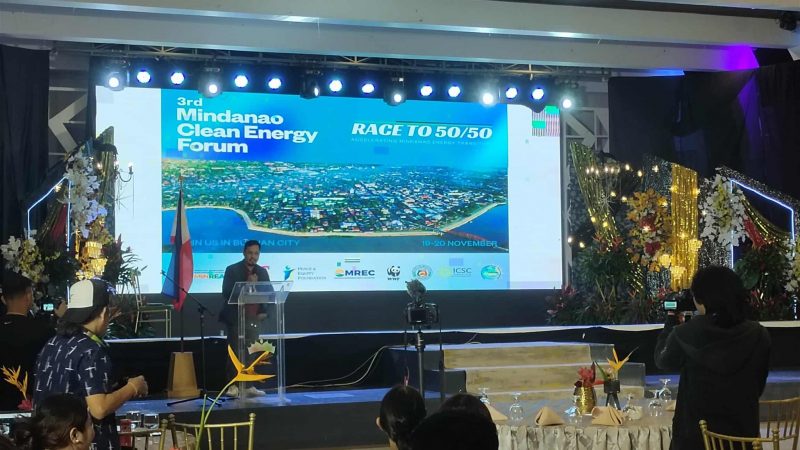
Dr. Enano highlighted MREC’s research on solar photovoltaic microgrid systems, ocean renewable energy, and concentrated solar power—emerging technologies with strong potential for deployment in remote hinterlands and small island and coastal communities providing social and economic impacts. He also emphasized MREC’s work on tracking the implementation of mechanisms under the Renewable Energy Act in Mindanao and assisting local government units in formulating sustainable energy development plans.
A key highlight of his presentation was the DOST-funded solar PV microgrid project in the Mandaya community of Manurigao, Davao de Oro. As one of the country’s pioneering microgrid initiatives, the project illustrates both the challenges and opportunities of providing electricity to off-grid communities and contributes significantly to the national push for total electrification. Dr. Enano underscored the critical role of microgrids in improving energy access, grid reliability, and environmental performance of off-grid energy systems. He also pointed out the existing investment gaps for microgrid development and discussed how mechanisms such as the Universal Charge for Missionary Electrification could be tapped to address these gaps.
Overall, MREC’s presentation during the 3rd MCEF highlighted the indispensable role of academic R&D as a trailblazer—advancing frontier technologies even when the enabling environment, including economic viability, technological readiness, institutional capacity, and consumer awareness, is still emerging.